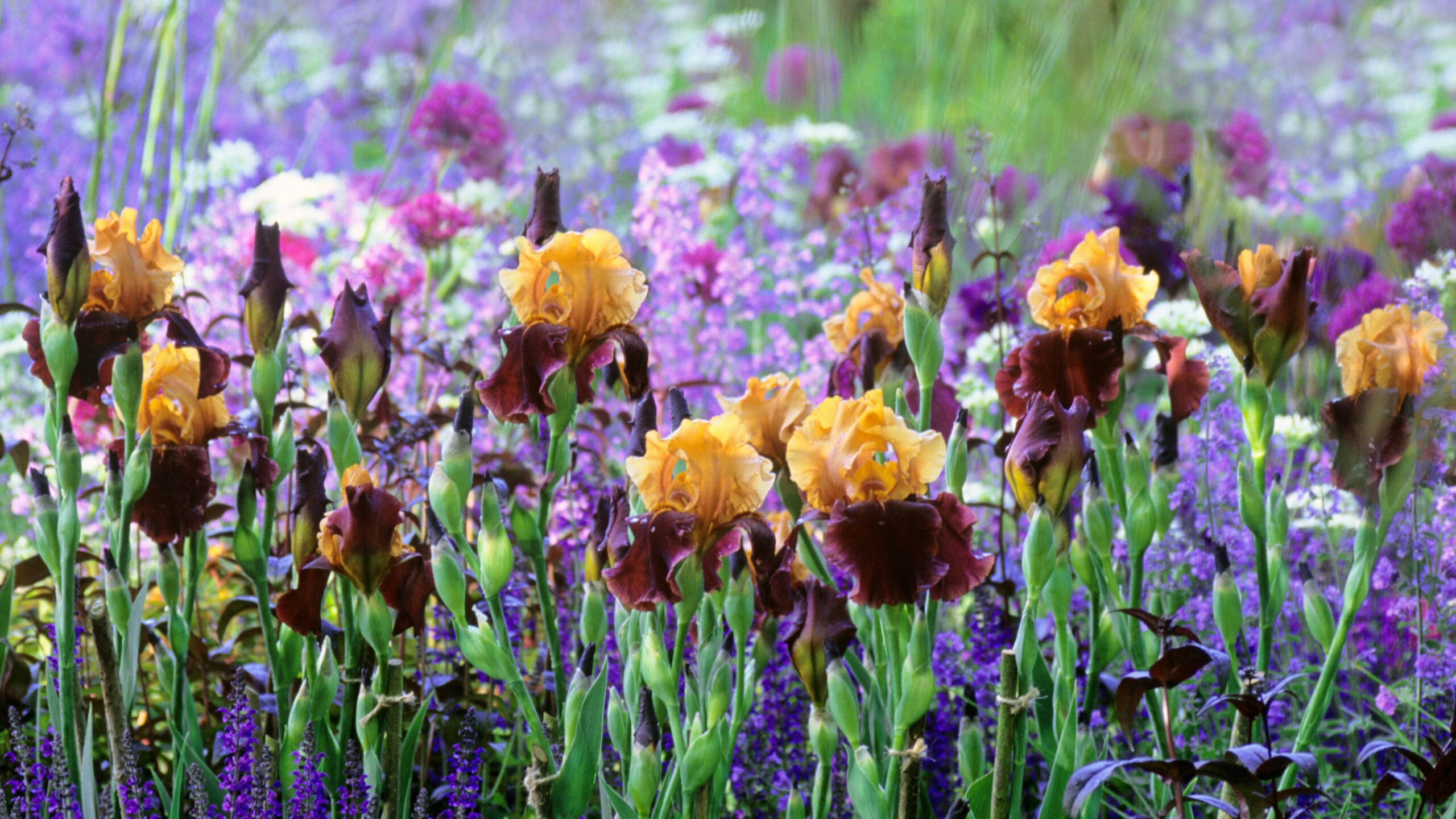
Bearded irises earn their place in the garden long before they flower. Their grey, sword-shaped leaves stand upright for months, giving strong vertical structure in borders. When the flowers arrive, they are unmistakable, with three drooping falls and three upright standards in a wide range of colours.
All shapes and sizes
The ‘bearded’ part of the name refers to the raised stripe along the centre of the falls, often described as a caterpillar. This usually contrasts in colour and adds extra detail to the flower.
Bearded irises are grouped into six categories, based on height.
The earliest to flower are the Miniature Dwarf Irises (MDI). These reach around 15cm and bloom weeks before most perennials. They suit sunny border edges and rockeries.
At the other end of the scale are the Tall Bearded Irises (TBI), reaching just over 1m. They flower in May and June and are regulars at the RHS Chelsea Flower Show.
Several other groups sit between these two, offering a wide range of heights and flowering times. Many gardeners and breeders have introduced new varieties over the years, so there is plenty of choice.
The latest look
New irises are introduced every year, although older varieties are often just as valuable. Many have proved reliable over time, with elegant flowers and good garden performance.
Recent breeding has favoured plants with several very large flowers on each stem. Some gardeners enjoy this bold look, while others find varieties such as ‘Dusky Challenger’ too top-heavy.
All bearded irises need space to perform well. A sunny corner of a border, or a warm strip along a wall or fence, suits them best. The flowers are lightly scented, make good cut blooms and cope well with summer rain. Winter waterlogging, however, is a problem and should be avoided.
How to grow bearded irises
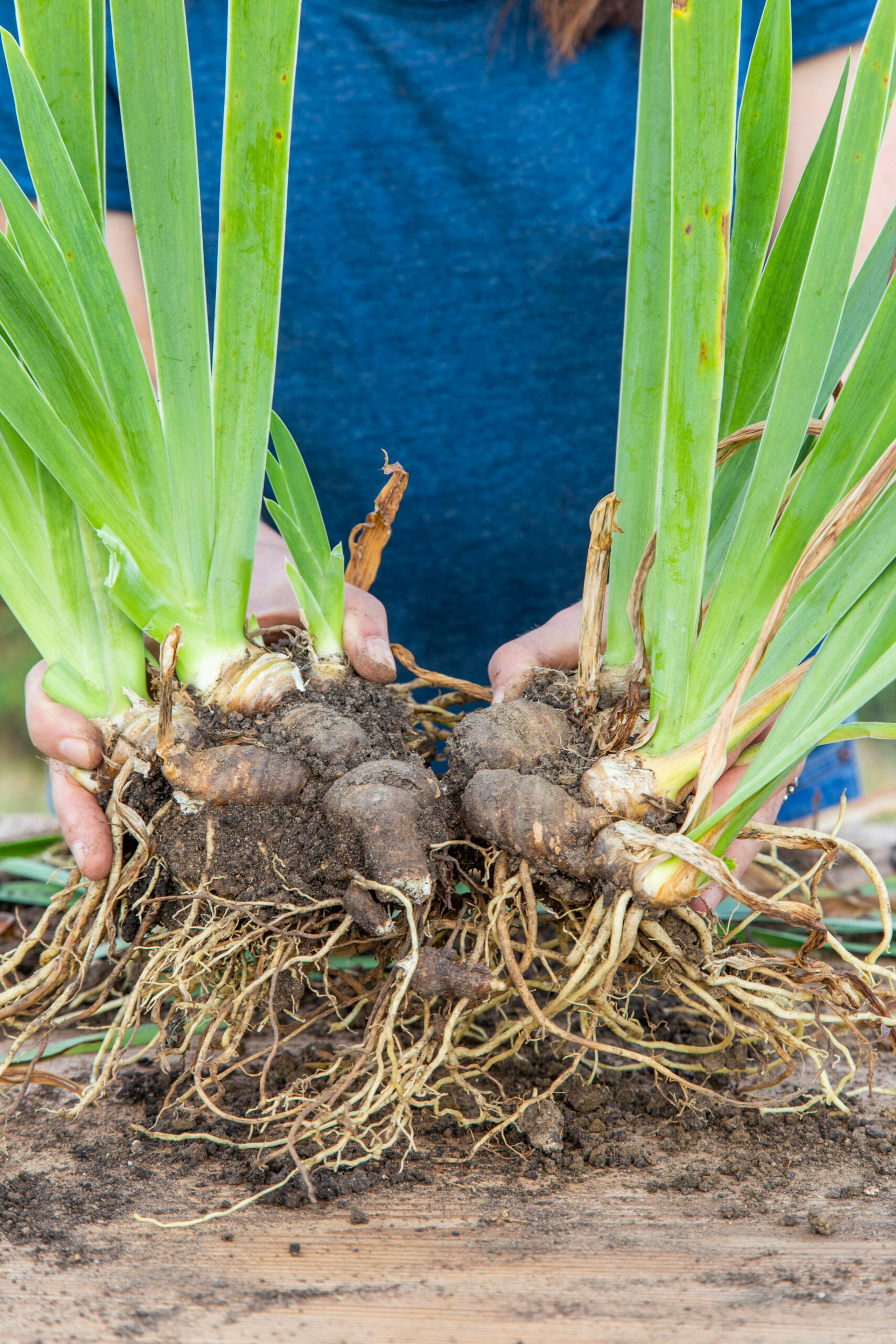
These sun-loving hybrids are descended from Middle Eastern species and grow from knobbly rhizomes rather than traditional roots.
• Plant with the rhizome just under the soil surface, facing the sun. Warmth and exposure help trigger flowering
• Keep them clear of neighbouring plants, as they dislike competition
• Avoid overfeeding. Apply a general fertiliser after flowering
• Divide clumps every three to four years in July or August
• Keep the freshest rhizomes and discard older sections
• Cut leaves back to 15 to 23cm to reduce wind rock after dividing
Five shorter irises for spring gardens - best for rockeries and border edges
‘Dunlin’: Miniature Dwarf Bearded. White flowers with dark blue edging and pale blue markings. Flowers in March. H: 15cm.
‘Gingerbread Man’: Dwarf Bearded. Butterscotch-brown flowers with violet-purple beards. Flowers from March to April and easy to find. H: 15 to 20cm.
‘Cherry Garden’: Small Dwarf Bearded. Plum-coloured flowers with a bright electric-blue beard. Flowers March to April. H: 20 to 25cm.
‘Langport Wren’: Intermediate Bearded. Raised by Kelways in the early 1970s. Deep purple flowers with a brown beard. Flowers in early May and works well at the front of a sunny border. H: 68cm.
‘Bumblebee Delight’: Medium Tall Bearded. Dark falls edged in gold with deep yellow standards. Raised in 1985 and award winning. H: 46cm.
Ten taller bearded irises for summer borders - mostly flowering in June
‘Benton Nigel’L Raised by Cedric Morris in the 1960s. Deep purple-blue flowers with brownish beards and a painterly feel. H: 1m.
‘Mer de Sud’: A French-bred Cayeux iris with ruffled cornflower-blue petals and darker beards. Strong foliage and very free flowering, so allow space. H: 80cm.
‘Braithwaite’: A 1952 variety with velvety purple falls edged pale and topped with lilac standards. Bright yellow beards lift the colour. One of the last to flower. H: 1m.
‘Going My Way’: Raised in 1971. White falls edged and splashed with deep violet, with broader, ruffled flowers. A strong and reliable garden plant. H: 94cm.
‘Quechee’: Mahogany-red flowers with golden beards and a noted chocolate-orange scent. Shorter than many and mixes well with pale blue plants. H: 90cm.
‘Carnaby’: A mid to late season iris from the 1970s. Peach-pink and lilac standards with rose-purple falls and vivid orange beards. H: 94cm.
‘Edith Wolford’: Ruffled flowers with pale yellow standards and lavender-violet falls, deepening towards the centre. Finished with an orange beard. H: 94cm.
‘English Cottage’: May flowering with pale violet-white blooms, often speckled and notably scented. Bred in America in 1976 and said to rebloom. H: 94cm.
‘Jane Phillips’ AGM: Raised in 1946. Pale blue, frilled flowers with brown veining on the falls and a partly white yellow beard. Very fragrant and well suited to summer borders. H: up to 1.2m.
‘Black Tie Affair’: Midnight blue to near-black flowers with a dark beard almost hidden by swirling petals. Elegant, well balanced and not overblown. H: 94cm.
Love what you’re reading?
Subscribe to Garden News and get the latest gardening advice, plant care tips, and outdoor living ideas delivered straight to your door. Whether you're a seasoned grower or just starting out, Garden News brings you expert insights that’ll help your garden thrive.